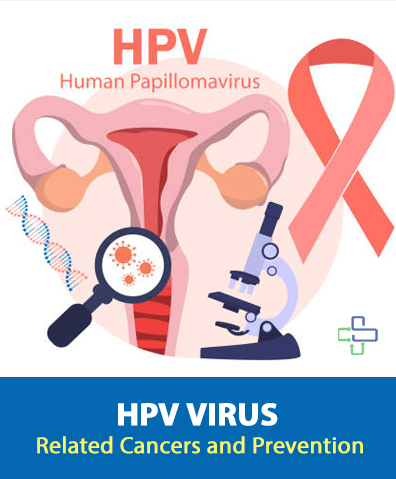
Human papillomavirus (HPV) is a major risk factor for several types of cancer beyond cervical cancer. This document expands on HPV’s role in cancer, discussing other HPV-related cancers, their prevalence, risk factors, prevention, and treatment, based on credible sources like the National Cancer Institute (NCI), World Health Organization (WHO), Centers for Disease Control and Prevention (CDC), and other medical organizations.
Overview of HPV-Related Cancers
HPV is a sexually transmitted infection that can infect the skin and mucous membranes, particularly in the genital, anal, and oropharyngeal (throat) areas. While most HPV infections clear up on their own, persistent infections with high-risk HPV types (e.g., types 16, 18, 31, 33, 45) can lead to cellular changes and cancer over time. According to the NCI and CDC, HPV causes approximately 37,300 cancers annually in the United States and around 690,000 globally, including cancers in both men and women.
High-Risk HPV Types and Their Association with Cancer
- HPV 16 & 18: Responsible for approximately 70% of cervical cancers and a significant proportion of anal, vaginal, vulvar, penile, and oropharyngeal cancers.
- HPV 31, 33, & 45: Also considered high-risk types, contributing to cervical and other anogenital cancers, though at lower frequencies than HPV 16 and 18.
- Other high-risk HPV types: HPV 35, 39, 51, 52, 56, 58, and 59 have also been linked to cancer development.
HPV-Related Cancers and Their Impact
| Cancer Type | Description | Prevalence | Risk Factors | Prevention | Treatment |
|---|---|---|---|---|---|
| 1. Anal Cancer | Develops in the anus or anal canal, often from precancerous lesions called anal intraepithelial neoplasia (AIN). Strongly linked to HPV-16. | ~9,100 new cases annually in the U.S., ~91% HPV-related (NCI, CDC). | HPV infection, HIV, smoking, multiple partners, weakened immune system. | HPV vaccination, safe sex, smoking cessation, potential anal Pap tests for high-risk individuals. | Surgery, radiation, chemotherapy. Early detection improves outcomes. |
| 2. Oropharyngeal Cancer (Throat Cancer) | Affects the back of the throat, including the base of the tongue, tonsils, and soft palate. HPV-16 is the leading cause. | ~20,000 new cases annually in the U.S. (NCI, CDC), rising globally. | HPV infection (oral sex transmission), smoking, heavy alcohol use, weakened immunity. | HPV vaccination, avoiding tobacco and excessive alcohol, practicing safe oral sex. | Surgery, radiation, chemotherapy. HPV-positive cases have better prognosis. |
| 3. Vulvar Cancer | Occurs on the external female genitalia (vulva). Often linked to HPV-16 and starts as vulvar intraepithelial neoplasia (VIN). | ~6,000 new cases annually in the U.S., ~40–50% HPV-related (NCI, CDC). | HPV infection, smoking, immunosuppression, history of cervical or vaginal cancer. | HPV vaccination, regular gynecological exams. | Surgery (e.g., vulvectomy), radiation, chemotherapy. Early detection is key. |
| 4. Vaginal Cancer | Develops in vaginal tissue, often as squamous cell carcinoma, linked to HPV-16 and HPV-18. | ~1,000 new cases annually in the U.S., ~70–75% HPV-related (NCI, CDC). | HPV infection, prior cervical cancer, smoking, weakened immune system. | HPV vaccination, regular gynecological exams, HPV/Pap testing if needed. | Surgery, radiation, chemotherapy. Early detection significantly improves outcomes. |
| 5. Penile Cancer | Affects the penis, often starting as penile intraepithelial neoplasia (PeIN). HPV-16 is a major cause.~2,200 new cases annually in the U.S., ~30–50% HPV-related (NCI, CDC). | ~2,200 new cases annually in the U.S., ~30–50% HPV-related (NCI, CDC). | HPV infection, smoking, poor hygiene, phimosis, multiple partners. | HPV vaccination, safe sex, regular genital exams. | Surgery (partial/total penectomy), radiation, chemotherapy. Early detection is critical. |
The Role of the HPV Vaccine in Cancer Prevention
Effectiveness
- Research suggests the HPV vaccine is highly effective in preventing cervical cancer, with studies showing up to 88% risk reduction in women vaccinated before age 17 (New England Journal of Medicine).
- The vaccine is nearly 100% effective against persistent HPV infection and certain cervical abnormalities in those not previously exposed to HPV.
- Early vaccination before sexual activity leads to greater effectiveness.
Real-World Data and Clinical Trials
- A large Swedish study followed 1.7 million women and found:
- 88% reduction in cervical cancer risk in women vaccinated before age 17.
- 53% reduction for those vaccinated at 17 or older.
- A Scottish study found no cervical cancer cases in women fully vaccinated at ages 12-13.
- Gardasil 9 trials (15,000 participants) showed near 100% efficacy against targeted HPV types.
- Quadrivalent Gardasil trials (29,000 participants) showed 99% efficacy in preventing genital warts.
- Bivalent Cervarix trials (30,000 participants) showed high efficacy against HPV 16, 18, and additional cross-protection.
Broader Impact of the HPV Vaccine
- Besides cervical cancer, the HPV vaccine is almost 100% effective in preventing external genital warts.
- It significantly lowers the risk of anal, vaginal, vulvar, penile, and oropharyngeal cancers.
- A STAT News study (2024) reported a 56% reduction in HPV-related cancers in men and 36% in women.
Vaccination Strategies and Recommendations
- The WHO recommends HPV vaccination for girls aged 9-14, with one or two doses.
- Studies show long-lasting protection (at least 10 years for Gardasil, 11 years for Cervarix).
- The CDC reports over 135 million doses distributed in the U.S. with an excellent safety profile.
Myths and Misconceptions About the HPV Vaccine
Despite strong scientific evidence supporting the HPV vaccine, several myths persist. Here are some common misconceptions and the facts to counter them:
| Myth | Fact |
| The HPV vaccine is only for women. | While the vaccine is crucial for preventing cervical cancer in women, it also protects men against anal, penile, and oropharyngeal cancers, as well as genital warts. The CDC recommends HPV vaccination for both boys and girls. |
| The vaccine is unnecessary if someone is not sexually active. | The HPV vaccine is most effective before exposure to the virus. That’s why it is recommended for preteens, ideally between ages 9-14, before sexual activity begins. |
| The HPV vaccine encourages promiscuity. | Studies have shown no link between receiving the HPV vaccine and increased sexual activity. The vaccine’s purpose is cancer prevention, not behavior change. |
| The HPV vaccine has severe side effects. | The HPV vaccine has been extensively tested for safety. The most common side effects are mild, such as soreness at the injection site, dizziness, or a low-grade fever. Serious side effects are extremely rare. |
| The vaccine is ineffective if not given at a young age. | While early vaccination is ideal, individuals up to age 45 can still benefit from the HPV vaccine. The earlier the vaccine is given, the better the protection, but it can still reduce the risk of HPV-related diseases in older individuals. |
Conclusion
The HPV vaccine is a highly effective intervention for preventing cervical cancer and other HPV-related diseases. With efficacy nearing 100% against persistent infection and significant real-world effectiveness, it is a cornerstone of global cervical cancer elimination efforts. Its early administration ensures the best protection, making it a critical public health tool in reducing the global burden of HPV-related cancers.